Robot inspections at Fenris: building tomorrow’s operations step by step
How do we inspect a platform where all access is via gangway from a vessel, and where every offshore visit is both time-consuming and costly? At Fenris, we are now testing the use of robotics for inspections and data collection as a direct response to future operational ambitions.
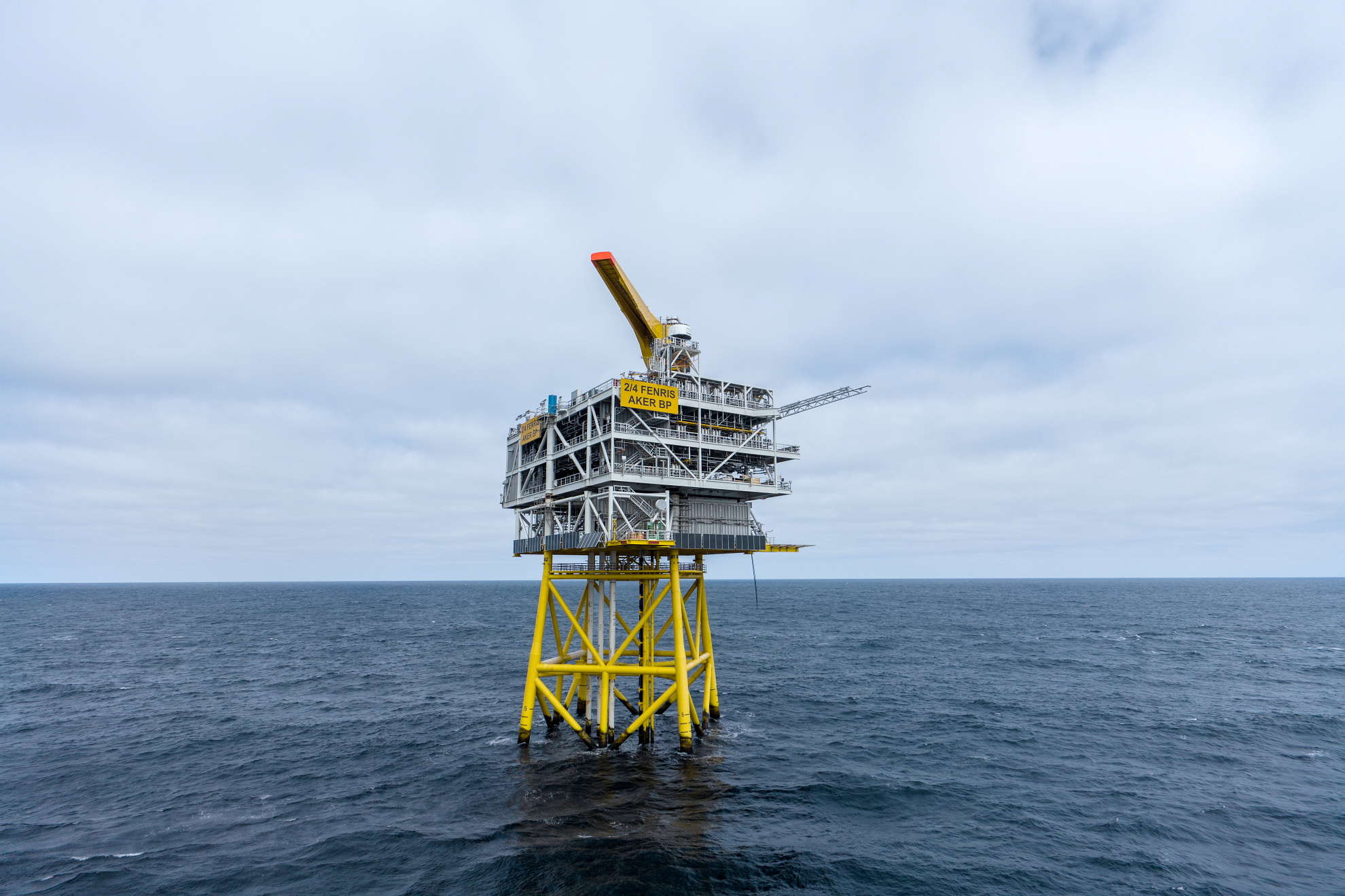
Fenris is one of two new platforms in the Valhall PWP-Fenris project, designed to ensure stable and high production from the Valhall field for many years to come. The platform was recently installed offshore and is expected to start production in Q3 2027.
On the Fenris platform, we have now initiated a pilot where a robot is used for observations, inspections, and data collection offshore. The goal is not to introduce technology for its own sake, but to identify solutions that create real value—operationally, in terms of safety, and organizationally.
Watch the video showing how the robot is used on board Fenris.
A response to Fenris’ unique framework conditions
Fenris will be an unmanned installation (UI), with all access provided via gangway from a Service Operation Vessel (SOV). This ensures high safety but also limits flexibility and entails significant costs related to mobilizing personnel offshore.
The robotic solution has been developed specifically to address these challenges. With the Taurob robot, Aker BP can carry out inspections and collect data without physical presence on the platform. This enables rapid response to deviations while reducing the need for offshore mobilization.
In short: the robot is a tool that directly reflects how Fenris is designed and will be operated.
Starting where risk is low, but learning is high
The pilot is conducted prior to the start of production, where risks are manageable and the potential for learning is high.
At this stage, we are testing whether the technology performs as intended and how the interaction between people, technology, and work processes functions in practice. Key areas of focus include the robot’s robustness in varying weather conditions, communication and availability, and not least how the solution integrates with existing offshore and onshore workflows.
The pilot setup allows for short learning loops and the ability to adjust both scope and ambition along the way, ahead of any potential scaling. This approach builds digital competence step by step.
From pilot to operations—and further scaling
Fenris also serves as a test laboratory for future operating models. The ambition is clear: if the pilot proves successful, the solution will be carried forward into the operational phase.
This is particularly relevant as Fenris produces from a high-pressure/high-temperature (HP/HT) reservoir. The long-term objective is to minimize interventions while maintaining close and intelligent monitoring. Early detection of anomalies can deliver significant value in terms of regularity, safety, and cost efficiency.
Over time, the robot may be used for routine inspections, condition monitoring, and support during incidents. The experience gained from Fenris will also be transferable to other unmanned installations, such as the Yggdrasil field’s Munin platform, and potentially to other normally unmanned facilities and new ways of working—such as remote support or “night operator” functions on projects like PWP. The learnings will also be relevant for future developments and existing brownfield installations.
Digitalization in practice, not just on paper
The use of robotics at Fenris is a tangible example of Aker BP’s ambitious digitalization strategy. Here, new solutions are tested in real operations, with controlled risk and a clear objective of long-term gains.
The project aligns with the ambition of leading operations of unmanned installations, as well as the company’s focus on data, remote operations, and autonomy.
What does success look like?
The pilot will be evaluated in a structured and transparent manner, based on clear criteria such as reliability and availability, usability for offshore and onshore environments, HSE impact, and cost-benefit.
Equally important is identifying what does not work and what needs to change before any potential continuation. All learnings—including those that fall short—will be shared across the organization.