Cracking the carbonate code at Symra
The Symra field on the Utsira High in the North Sea has presented some of the greatest drilling challenges for Aker BP in recent years. Even so, the team has succeeded in delivering safe, producing wells in a reservoir that is notably complex to manage.
“The Zechstein carbonate at Symra remains one of the most challenging formations we drill in. Large cavities and many faults mean we experience significant losses when we encounter them”, says Jan Roger Berg, VP Drilling & Wells, Eiga and Ula.
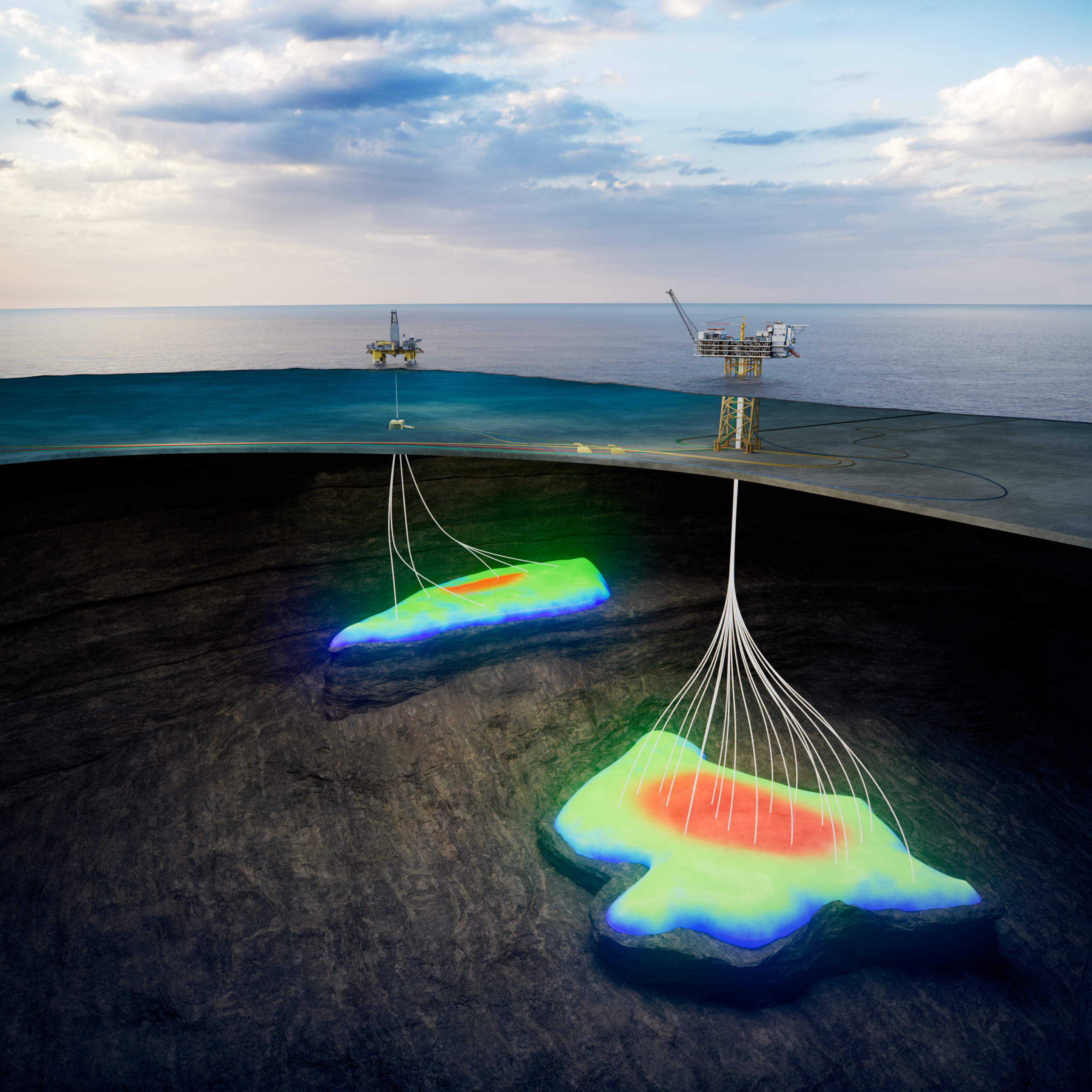
The Symra field is located about 7 kilometres northeast of the Ivar Aasen asset, which is operated by Aker BP. Production is intended to be partially processed at Ivar Aasen before final processing at Edvard Grieg. The development includes four wells connected to a subsea well frame. Both platforms have been modified to enable the connection of subsea infrastructure to Ivar Aasen and to increase processing capacity at Edvard Grieg. It is estimated that the field may contribute around 63 million barrels of oil equivalent to the Eiga area.
A different reservoir
“Symra is a carbonate reservoir in the Zechstein formation. Carbonate reservoirs differ from the more familiar sandstone reservoirs by being significantly more unpredictable. Oil is found here in the rock, fractures, cavities, and dissolved channels”, explains carbonate geologist Niels Rameil.
“This reservoir almost resembles something you see in cartoons, with very high porosity and open cavities, which provides good production properties for oil”, says Magnus Holm-Gjerde, VP Project Execution Eiga asset.
Significant losses during drilling
It was precisely these cavities that made drilling at Symra particularly challenging. When the drill encountered open fractures and channels, large amounts of drilling fluid disappeared straight into the formation.
“We experienced periods with significant fluid losses. In such situations, we have to stop work, pull back to the last casing shoe, and pump in SentinelCem, a cement used in wells to seal leaks. The cement finds its way to the leakage points and sets quickly, so that losses are reduced. Before we can continue drilling, we have to wait until the cement has set, and this must be repeated for every new loss zone we encounter, says Berg. As the number of loss zones increases and we pass them, it becomes increasingly challenging to maintain well control”, says Berg.
This led to regular assessments throughout the process and a drilling operation that required close collaboration across disciplines. Here, the use of the Control Mud Level (CML) system to reduce hydrostatic pressure against the loss zone, as well as Wired Drill Pipe, drill pipe with built-in cables for real-time data transfer from well to surface, like “fibre in the drill pipe”, was extremely important for a successful outcome.
A toolbox, but not a single simple solution
There was no single solution that addressed the challenges at Symra. Success came through a combination of technology, experience, and operational discipline.
Among the most important measures were:
- Having good plans with decision trees for loss types and sizes, with plans for which solution to use in each individual case
- Controlled Mud Level (CML) for better pressure control and reduced overbalance in the hole, which minimises loss and loss rate to the reservoir
- Drilling with treated seawater in parts of the reservoir
- SentinelCem TM Cement System, an acid-soluble cement that effectively stops losses, but can later be dissolved for production
- Adaptation of completion solutions to enable safe completion with losses
“The toolbox we have developed for Symra has worked very well. Together with a good understanding of which operational limitations we need to stay within, we have to a large extent cracked the carbonate code. Here, it is just as important to know when to stop as when to push further”, says Holm-Gjerde.
Teamwork made the difference
At least as important as the technology was the way the team worked. Interdisciplinary collaboration, quick decision-making and close coordination between onshore and offshore were crucial. Another important success factor was the strong interaction with our alliance partners Odfjell Drilling and Halliburton.
“This is a true One Team project. When everyone pulls in the same direction, and we dare to make the tough calls along the way, it is incredible what we can achieve”, says Christer Brown, Drilling superintendent Aker BP on the drilling rig Deepsea Nordkapp.
Valuable experience for the future
The result is producing wells in one of the most challenging carbonate reservoirs on the Norwegian continental shelf and experiences that open up new opportunities, both in Eiga and other parts of the portfolio.
“What the Symra team has delivered here is among the strongest and most challenging we have done in drilling in recent years”, summarises Berg and adds:
“Symra demonstrates that when expertise, technology and collaboration come together, we can succeed, even where geology truly puts us to the test”.
Development activities have been carried out in close partnership with several notable suppliers. TechnipFMC has supplied the subsea systems, Moreld Apply has performed modifications on the Edvard Grieg platform, and Aibel has finished updates on the Ivar Aasen platform. Drilling operations have been conducted by Odfjell Drilling and Halliburton through Aker BP’s drilling and wells alliance. Through their combined efforts, the suppliers have contributed to a safe, efficient, and high-quality project execution.
Symra is the sixth Aker BP-operated project that was sanctioned in 2022 and is now in production.
Aker BP is the operator for Symra (PL167/167B/167C) with license partners Equinor (30 percent) and DNO Norge (20 percent).