Eight alliances. One shared ambition
Most companies manage complex offshore projects through contracts. Aker BP manages them through alliances.
Instead of dividing work between operator, contractors and service companies, Aker BP bring people together in integrated teams with shared goals, shared incentives and a common responsibility for delivering the best possible result.
Today, Aker BP has eight strategic alliances across the value chain. Together, they have become one of the company’s strongest competitive advantages and a key reason why Aker BP consistently delivers some of the world’s most efficient offshore developments.
Moving beyond traditional contracts
In a traditional project model, every company delivers its own scope. Responsibilities are clearly defined, but so are the boundaries between organisations.
Those boundaries often create unnecessary interfaces, duplicated work, delayed decisions and missed opportunities for improvement. The alliance model takes a fundamentally different approach.
Rather than asking who owns a specific task, integrated teams work together to solve challenges collectively. Engineers, specialists and service companies share information, data and expertise from the earliest planning stages through execution. Instead of optimising individual contracts, everyone focuses on optimising the total project.
One team, not separate companies
One of the biggest strengths of the alliance model is that organisational boundaries become far less important.
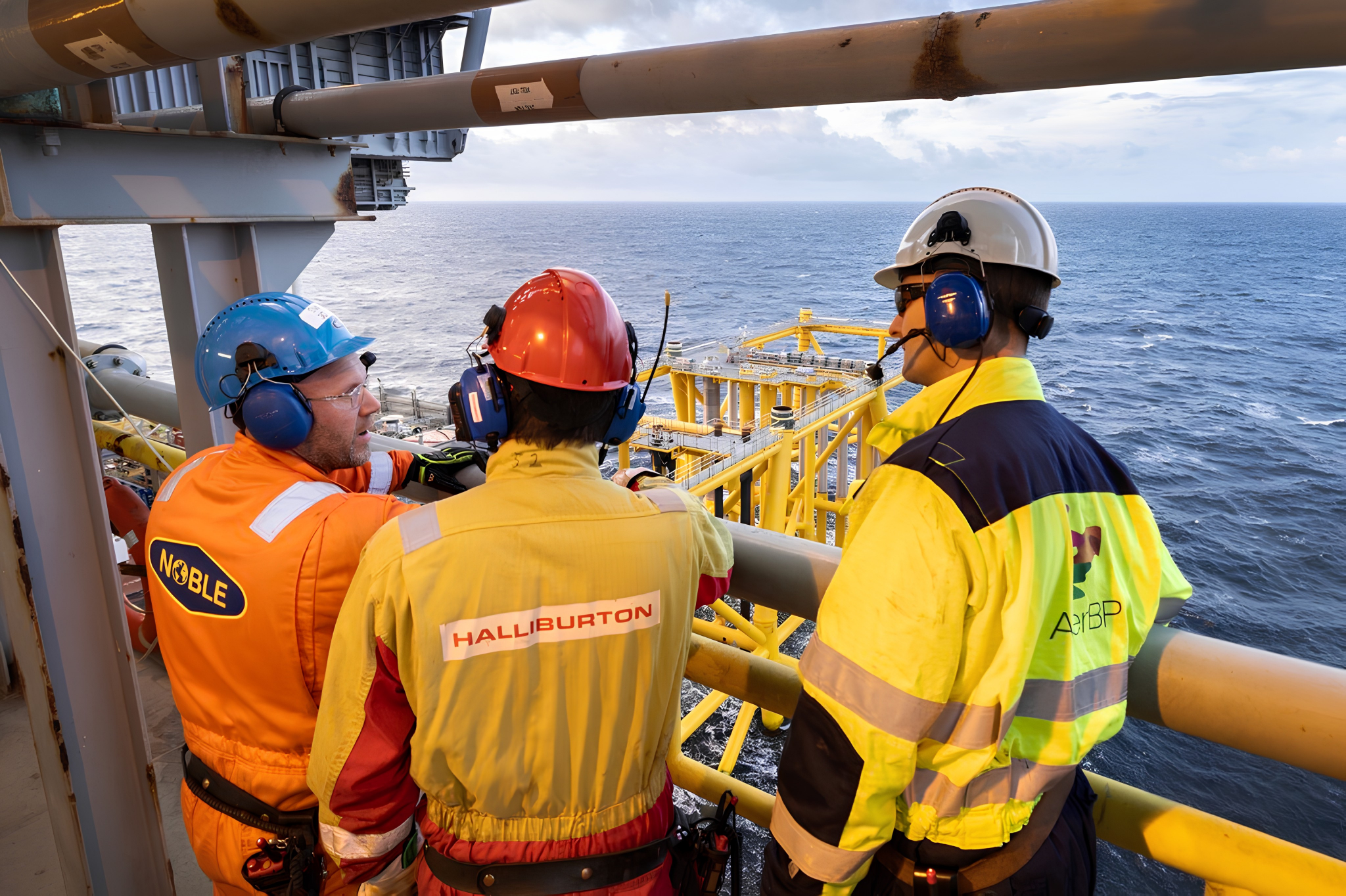
People from different companies work side by side as one team. Data flows openly across organisations. Decisions are made faster because everyone works from the same information and towards the same objectives.
The result is fewer misunderstandings, fewer handovers, better system integration and significantly less time spent managing interfaces between companies.
Perhaps even more importantly, the model creates a working environment where everyone is encouraged to contribute ideas, regardless of which company employs them.
“People don’t come to work thinking about which logo is on their badge. They come to solve problems together. That’s when the best ideas emerge,” said Stian Øistensen Jørgensen, Alliance Manager, Jack-up Alliance.
Continuous improvement that compounds
The real value of an alliance is not measured by a single well. It is built over hundreds.
Because the same organisations work together over many years, experience is continuously transferred from one operation to the next. Lessons learned are implemented immediately. New technologies are adopted faster. Improvements accumulate instead of starting from scratch with every new project.
This continuous learning culture has contributed to Aker BP consistently delivering some of Norway’s highest-performing development wells, with improvements in drilling efficiency, connection times and overall well delivery.
Better for everyone
The alliance model is designed so that success is shared.
Partners gain long-term predictability, allowing them to invest confidently in people, competence and new technology. Performance incentives encourage innovation and continuous improvement rather than short-term optimisation.
For Aker BP, the benefit is early access to world-leading expertise throughout the planning and execution phases, creating better technical solutions while reducing project risk.
“When we align objectives instead of contracts, we unlock the full competence of every company involved. That’s how we continue to improve performance year after year,” said Tommy Sigmundstad, SVP D&W, Supply Chain Management & Logistics
A model attracting international attention
The success of the alliance model has attracted interest far beyond the Norwegian Continental Shelf.
Operators, contractors and industry organisations from around the world have visited Aker BP to understand how integrated alliances operate in practice. While every organisation develops its own approach, the underlying principles remain consistent: trust, transparency, aligned incentives and continuous improvement.
Building the future together
The offshore industry faces growing expectations for safer operations, greater efficiency and lower emissions. Meeting those expectations requires more than new technology. It requires new ways of working.
For nearly a decade, Aker BP’s alliance model has demonstrated that when companies replace traditional customer-supplier relationships with genuine collaboration, they create value that no single organisation could achieve alone.
That is why alliances remain a cornerstone of how Aker BP develops the resources on the Norwegian Continental Shelf and why collaborative performance will continue to shape the future of offshore energy.
The Aker BP alliance model
- Eight strategic alliances across the value chain
- Integrated teams across operator, contractors and suppliers
- Shared objectives and aligned incentives
- Open sharing of data and expertise
- Continuous improvement across hundreds of operations
- Long-term partnerships built on trust and transparency